
You wake up in the morning and reach for your glasses. They’re not on the bedside table. Again. You’re knocking things over, squinting into blurriness until you finally feel them somewhere?
Sound familiar? Millions of Australians glasses or contact lenses just to see clearly so you’re not alone.
You’ve probably wondered about laser eye surgery at some point. Perhaps you’ve heard about it on the TV or heard friends speaking about it. Either way you want to know more about laser eye surgery and that’s exactly why the experts at Insight Eye Clinic have given us advice to help people understand their options. Let’s run through the basics!
The basics of how your eyes work
Before we dive into lasers and surgical procedures it helps to understand why you need glasses in the first place. Your eye works a little bit like a camera, light enters through the cornea passes through the pupil and gets focused by the lens onto the retina at the back of your eye.
When everything is working perfectly light focuses precisely on the retina creating a sharp image. But for many people the shape of their eye means light doesn’t focus quite where it should. Maybe your eye’s slightly too long too short or your cornea isn’t perfectly curved.
These slight small differences are the main cause of most common vision problems you hear about. Short sightedness, long sightedness and astigmatism. There’s no real reason or anybody’s fault for this, it just is simply how your eye grew and developed. Just simply the cards you were dealt, just like having brown hair.
What laser eye surgery actually does
Laser eye surgery doesn’t replace your natural lens or change how your eye works all together, it just reshapes cornea, the clear dome shaped front part of your eye, to change how light gets focused.
Think of it like adjusting the curve of a camera lens to get a sharper picture. The laser removes tiny amounts of corneal tissue extremely carefully, creating a new shape that focuses light exactly where it needs to go.
The whole process happens at the microscopic level. We’re talking about removing tissue measured in fractions of a millimetre. It can correct vison problems you’ve struggled with your whole life.
Different types of laser eye surgery (they’re not all the same)
This is where things can get confusing because there are several different types of laser eye surgery each with its own acronym and technical name.
LASIK is probably the one you’ve heard most about. It involves creating a thin flap in the cornea folding it back reshaping the underlying tissue with a laser then replacing the flap. It’s like opening a book editing a page then closing it again.
LASIK has been around for decades and has a solid track record. Recovery for LASIK is very fast, people often recover in hours and are back on their feet the next day. Probably best to book a few days of work to make sure everything is okay.
PRK is the older technique that LASIK evolved from. Instead of creating a flap the surgeon removes the outer layer of the cornea entirely then reshapes the exposed surface with a laser. The outer layer grows back naturally over a few days.
PRK takes longer to heal than LASIK. Sometimes people have weeks to heal rather than hours or days. But this option is great for those who cant have LASIK due to a thin cornea or other reasons.
SMILE is the newer option. Instead of creating a flap or removing the surface layer a laser creates a tiny piece of tissue inside the cornea which is then removed through a small incision. It’s the least invasive and can be good for people with dry eyes.
Each surgery has their own pros and cons so its up to you to do your personal research and consult with your doctor about what suits you the best.
Who can have laser eye surgery (and who can’t)
This might be the most important part to read as laser eye surgery is serious and only suitable for some people.
Your prescription needs to be stable for at least 12 months. If your vision’s still changing surgery won’t give you lasting results. Most surgeons won’t operate on anyone under 18 for this reason because their eyes are still developing.
Your corneas need to be thick enough to safely remove tissue without weakening your actual eye structure. Some people naturally have thinner corneas which means laser eye suregry is not suitable.
Certain health conditions can affect healing and surgery outcomes. Diabetes, autoimmune diseases, and some medications can all affect whether or not it is right for you.
Pregnancy and breastfeeding can temporarily change your vision so most surgeons recommend waiting until you’re finished having children and have stopped breastfeeding.
If you have severe dry eyes, certain procedures might make the condition worse, but there are newer surgeries to help people in this situation, as dry eyes is very common among people with vision issues.
What to expect during the procedure
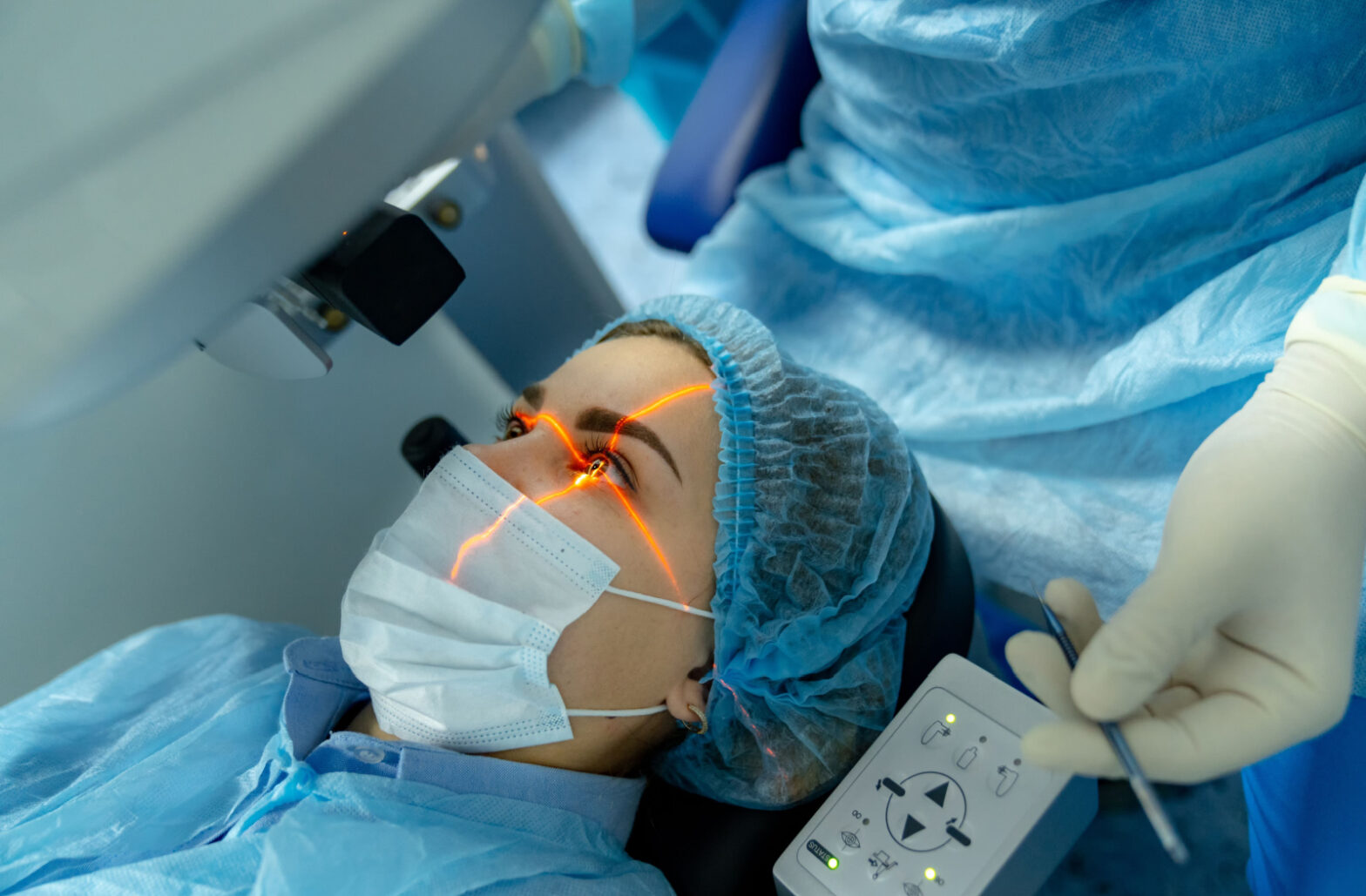
The actual surgery itself is super fast. It normally takes 30 minutes to complete both eyes. You are awake for the procedure but your eyes will be numb so you wont feel any pain.
You’ll lie down under the machine while the surgeon places a small device to keep your eyelids open. You will be able to see what’s happening but its not as scary as you may think. Some people describe seeing coloured lights flashing and others have noted a small pressure on the eyes but nothing painful or dramatic.
The laser completes the surgery in seconds or minutes depending on your prescription. You might hear clicking sounds or smell something unusual but that is perfectly normal.
After the procedure your vision will be blurry for a while. Which is to be expected, and you shouldn’t worry or think they have messed up your vision for life!
Someone will need to drive you home and you’ll probably want to rest with your eyes closed for the rest of the day.
Recovery reality check
While laser eye surgery recovery is pretty straightforward it’s not instant perfect vision for everyone.
For the first few days your vision may change. You may seem slightly hazy or see halos around lights. Your eyes may also feel dry or scary but again, this is perfectly fine and normal. Its all a part of the healing process and your vision should be perfect soon.
Most people go back to work after a few days but make sure to avoid things like hot tubs and wearing eye makeup. You also should avoid anything serious like contact sport or anything that could hard or injure your eye, like ball sports that could have a ball flying at your eye! Avoid things like this for at least a few weeks.
Overall
Laser eye surgery’s helped millions of people get their eyesight back. For many it’s genuinely life changing. But it’s not magic and it’s not right for everyone.
If you’re thinking about laser eye surgery do your research choose a reputable surgeon and make sure your expectations are realistic.
Your eyesight is precious an valuable none the less, so whether you choose surgery or stick with glasses and contacts the most important thing is that you can see clearly and comfortably for many many years.